

What Comes After Forever
After three millennia of last rites, what remains to pray for?

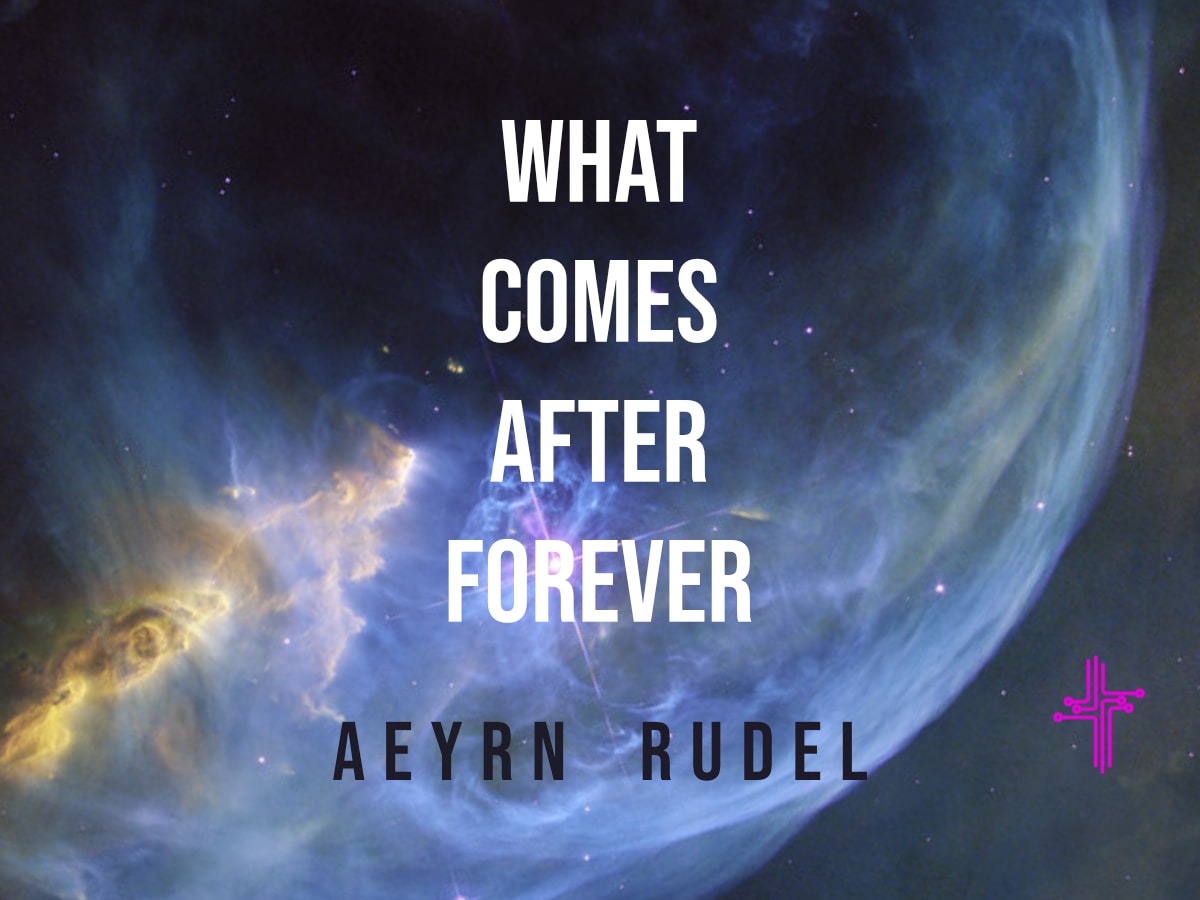
By Aeryn Rudel
Edited by Yuval Kordov
The lid of my cryopod opens with the tired groan of ancient hydraulics. Beyond is dark and cold. My limbs are leaden weights, my mouth ash, but I manage to tap the neural node on my left temple.
When?
Two thousand one hundred cycles since your last awakening, the ship’s computer says into my mind.
The calculation is in Eridani time because someone thought it would be morale-boosting to use the orbital period of our future home. I do the math in my head. I’ve been asleep 3,600 years, give or take a decade.
How many? is my next question.
Nine units show a decrease in function. Four have gone offline.
I sit up and shiver. The overhead lights come on—those that still function—revealing an endless corridor filled with egg-shaped pods about three feet apart. The walls, once clinical white, have faded to the color of old ivory.
I climb out of my pod, joints aching, muscles quivering with cryo-fatigue. My breath fogs the air, and I reach for the therma-coat on the hook nearby. I put it on, grimacing at the smell—the acrid stink of synthetic fibers starting to break down. It’s still warm, though.
Show me the malfunctioning units, I tell the computer.
Brighter lights sputter in the distance, spotlighting the faulty pods.
The first is only a dozen yards from my own. The status light on the unit blinks crimson. Imminent failure.
I place a hand on the dust-coated creche, and information about the occupant floods my mind.
Lana Vance, twenty-seven, violinist.
Ages ago, Lana boarded a ship called the Seton with hopes and dreams of colonizing a new planet, maybe playing her violin on a world that had never heard music. She was supposed to wake up to a new life in three hundred years, a mere blip in cryosleep. Instead, she’s been entombed in an egg-shaped coffin for the better part of ten millennia.
Repair drone? I ask, though I already know the answer.
Negative. Reserved for essential personnel.
Violinists are not essential on our new home. Not that it matters. None of us will see that new home anyway. A few awakenings back, I discovered that a slight miscalculation caused the Seton to shoot past Eridani. We’ve been drifting for thousands of years, and the ship’s computer is unwilling or unable to accept it.
I unfasten the top of my slipsuit, exposing my priest’s collar, and pull out my rosary. The Seton is a colony ship, and its passengers share one thing in common: faith. We left Earth to make a new life and a new church in the heavens. We’ll be denied both.
I give Lana Vance last rites. When I finish, I watch the blinking light on her pod for a few seconds, hoping Lana’s last dreams are of playing her violin in the golden sunshine of Eridani.
I move on.
The status light on the next pod-in-distress also blares critical red. A touch reveals that this is Arthur Odhiambo, forty-one, botanist. The computer tells me Arthur is, in fact, essential.
A repair drone soon appears, a hovering silver sphere about the size of a basketball. Small hatches open on its surface, and spindly mechanical limbs extend, each tipped with a diagnostic sensor or tool. It sets to work, and I wait nearby. If the drone is unable to repair Arthur’s pod, he’ll get last rites, too.
The repair drone finishes, and Arthur Odhiambo’s status light goes from red to yellow. At some point—maybe next week, maybe a thousand years from now—I’ll be standing over his pod, mumbling the same tired blessing I gave Lana Vance.
The next seven pods show yellow or red. Five are deemed essential and successfully repaired. I perform last rites on the remaining two.
Now I must attend to the failed units. The first hunkers in a pool of shadows beneath the burnt-out star of one of the cryobay lights. No status light is visible. The plastic shell of the pod is a gray shroud.
“Light,” I say, my voice cracked and weak from disuse.
The repair drone produces a limb tipped with a flash node, illuminating the dark space.
Who was it? I think at the computer.
Mary O’Malley, forty-eight, historian.
The name jogs my memory. I attended to Mary during my last awakening.
I pull the emergency release lever on the dead pod, and its lid shudders open. The sterile interior of the ship radically slows decomposition, and even after three thousand years, Mary O’Malley is mostly intact, a withered mummy held together by the ivory sheen of a slipsuit.
The repair drone uses a plasma spray to reduce Mary’s corpse to fine ash, then extrudes a flexible black tube and vacuums her up.
We repeat the procedure on the other three dead pods, and I follow the drone to the airlock. From the other side of the inner hatch, I intone the rite of committal. Then the outer lock opens, and the drone spews its payload of human remains into the void.
Chaplain Graham, please return to your pod, the computer urges.
My work is done.
I shuffle through the bay. The weight of my rosary feels like it might drag me through the deck. When I get back to my pod, the status light has turned yellow. Desperate hope blooms.
Unfortunately, the repair drone has followed me like a faithful hound or maybe a carrion bird, and it sets to work.
“Cease repairs,” I say.
Negative, the ship replies. Chaplain Graham Stowers is essential personnel.
“Essential to what?”
Silence.
I bang a fist on my pod. “Essential to what?!”
There is no answer.
The drone finishes its repairs, my pod opens, and pointless eons beckon.
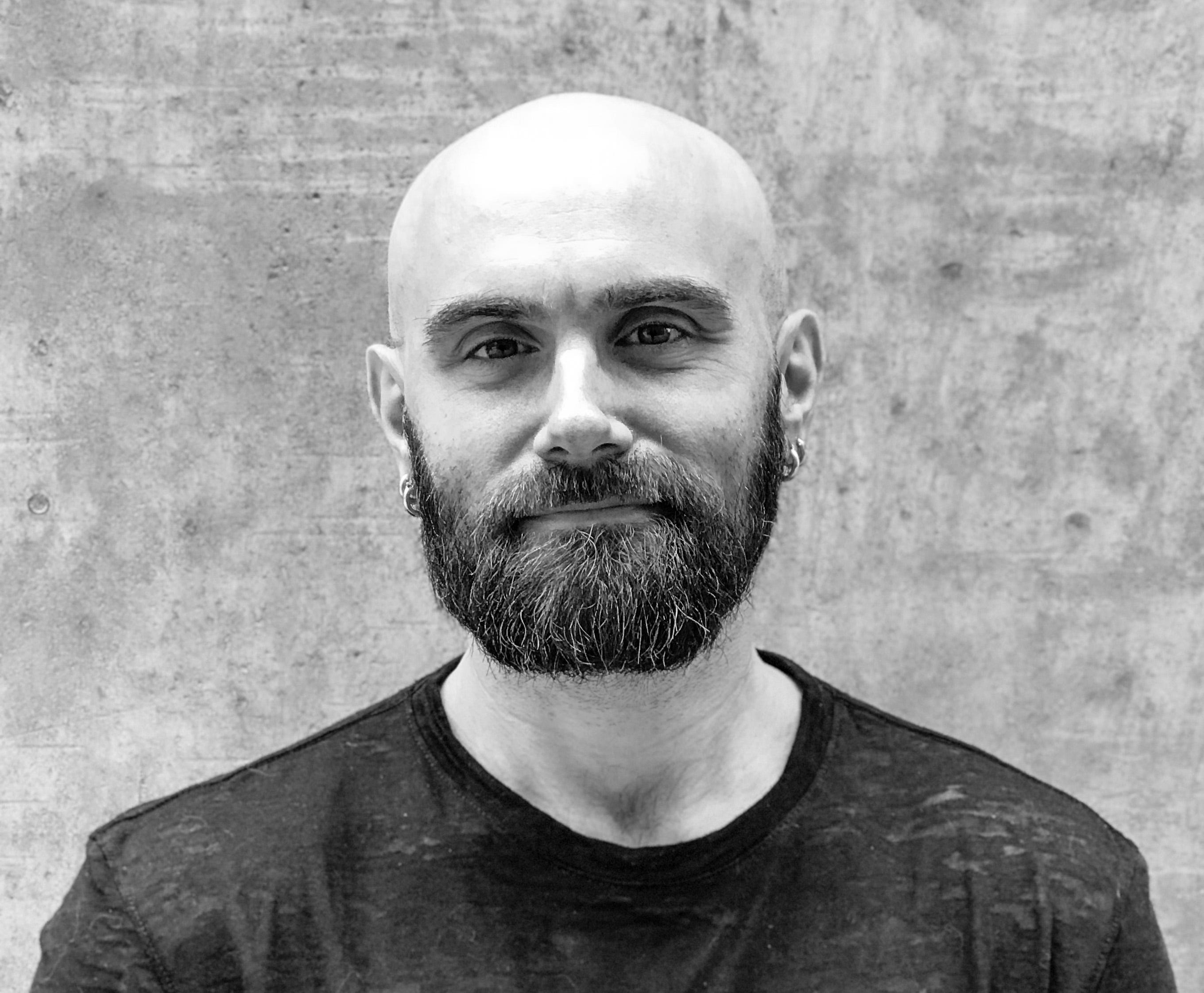
Aeryn Rudel is a writer from Tacoma, Washington. He is the author of the baseball horror novella Effectively Wild, the Iron Kingdoms Acts of War novels, and the flash fiction collection Night Walk & Other Dark Paths. His short stories have appeared in Abyss & Apex, Ellery Queen Mystery Magazine, and Pseudopod, among others. Learn more about Aeryn’s work at www.rejectomancy.com or on Bluesky @aerynrudel.bsky.social.
Copyright © 2026 Aeryn Rudel & Incensepunk Magazine
All rights reserved
No part of this publication may be reproduced, distributed, or transmitted in any form or by any means, including photocopying, recording, or other electronic or mechanical methods, without the prior written permission of the author, except for the use of brief quotations in a book review.
This is a work of fiction. Names, characters, organizations, places, and incidents either are the product of the author’s imagination or are used fictitiously. Any resemblance to actual persons, living or dead, events, or locales is entirely coincidental.
 | A guest post by
|
I think about dwindling parishes, some bear the odds and strike a renewal, others just hurdle towards what seems endless sick calls and funerals.
I am extremely grateful that the older families and priests in mine that have stuck out years or decades of apathy and neglect wait for resurgence to come before they go home.
Thank you for this story it is good to reflect on
Depressing, but fascinating! Great read.